 Menu
Sweet Remembrances: Halloween Candies of the 1950s and ‘60s
Sweet Remembrances: Halloween Candies of the 1950s and ‘60s
By Leo Racicot
Part of the magic of trick-or-treating for kids in the 1950s and ’60s was the different kinds of candy we’d find when we got home and dumped the contents of our trick-or-treat bags on the bed or the kitchen table. Because — as we walked from door-to-door in the dark, spooky night, we couldn’t always see what neighbors were plopping into our bags as we greedily opened them wide. Marie would drive Diane and me to better parts of the city: The Highlands (where she lived and knew the folks and friends whose homes she took us to), sometimes to Andover Street “where the wealthy homes were” where she was sure we Halloween pirates could plunder some serious loot.
These days, Halloween isn’t the bare bones door-to-door night of fun it was in my time; it’s evolved (some might say devolved) into a months-long juggernaut of celebration equal in scope and scale to Christmas. My neighbors’ children, Loc and Phan, were asking their dad to take them for their Halloween costumes in August. When their father told them it was much too early to do that, that stores didn’t yet stock for Halloween, Loc looked up at him and said, with assurance, “You can buy them online, silly!”
But I began this chat intending to sing the praises of Halloween candies, many of which you don’t see anymore. To my taste buds, candy isn’t the same as it was when Diane and I were kids. So many have been discontinued. So many don’t taste the way they used to. On the rare occasion that I get a craving for a chocolate bar, I’ll add one to the checkout belt at Market Basket, hoping to relive the yester year glories of it, only to find the flavors I remember have been eliminated. A disappointment for my palate and for my taste-memory.. Here’s a list of what used to be what trick-or-treaters would find in their candy bags when they dragged home from a long night of Halloween pillaging:
Fizzies: Fizzies were small, round tablets. They came in a small packet. These tablets were usually red, orange and purple depending on the flavor(cherry, orange, grape) they produced. Plopped into a large glass of cold water, they began to fizz much the way Alka Seltzer fizzed, making the water the color of the Fizzie. Kids loved them because they loved watching the colorful, bubbling action. Moms liked them because they weren’t as sugary sweet as tonic (soda pop). I knew a couple of neighborhood kids who let the tablet dissolve on their tongue, sticking it out after, for shock value and for bragging rights (“See how purple my tongue is!”) I wasn’t brave enough to eat a whole tablet but did like the drink Fizzies created. Fizzies contained cyclamates, artificial additives. When studies showed how unhealthy over time these could be, Fizzies were removed from grocery store aisles. I doubt anyone born after 1968 or so would know what they were.
Candy Cigarettes. The name is self-explanatory. These were little sugar sticks made to resemble real cigarettes. They were more for making kids look/feel cool, “smoking” like they saw their moms and dads doing. After we got tired of pretending we were smoking, we could eat the stick. Cigarette sticks disappeared from store counters after the government deemed them to be a trigger for kids to later on in life become smokers. Studies have shown they led growm children to become lifelong cigarette smokers and that tobacco companies were behind the manufacture of candy cigarettes, brainwashing children to think cigarettes were safe, just like candy.
Seven-Up Bar. I loved, loved, loved Seven Up bars; they consisted of a long “train” of chocolate “pillows” or sections. Each pillow contained a different flavor of confection: coconut, butterscotch, buttercream, fudge, caramel, maple cream. orange jelly and Brazil nut. The great fun of a Seven Up bar was eating your way through it, eager to get to your favorite “pillow”. Ultimately, the Seven Up bar with its multiple flavors became too costly to manufacture and the item was discontinued.
Wax Lips: Every kid hoped someone would drop a pair of wax lips in his/her trick-or-treat bag. Wax lips were made of paraffin, super oversized, swollen lips that kids would then wear as they walked the candy streets. They were one of the most popular sights on Halloween night. When you got tired of wearing them, you took them off and ate them, working them like chewing gum. They were eventually banned as health hazards but I remember seeing them as recently as the ’80s in Jack’s Joke Shop on Tremont Street in Boston.
Crackerjack Prizes; Crackerjack boxes still contain a prize inside but compared to the treasures they held back in the day, the prizes nowadays could be called crummy, not worth the popcorn and peanuts you have to eat to reach down to them. In Crackerjack boxes, I found whistles (that really worked), magnifying glasses and a mini-locomotive with moving parts and a reflecting light that shone in the dark. The best prizes were costing the Borden Company an arm-and-leg so manufacturers changed over to cheaper, less appealing prizes: fake paper tattoos, stickers, little tic-tac-toe games. The dangers of a child swallowing a whole whistle or train caboose were too real. That was the end of elaborate Crackerjack prizes.
Licorice ropes. Licorice ropes came coiled up like snakes. As you ate the candy, the “snake” uncoiled. It was common for kids to bring them along to the movie theater where chewing on the licorice rope would last you through the whole movie. After, as with Fizzies, you’d boast to your fellow moviegoers by sticking out your tongue to see whose mouth was the blackest, the reddest.
Bubble Gum Cigars As with candy cigarettes, bubble gum cigars were designed to make a kid think he was smoking a real one. Bubble gum cigars looked like real Coronas, Havanas and Perfectos down to the elegant cigar bands and boxes they were displayed in in variety and candy stores of the time. Again, as with cigarette sticks, it was believed this gum subliminally encouraged kids to take up cigars when they got older so these, too, disappeared from the culture.
Wax Syrup Bottles These were great fun — tiny bottles made of wax with colored liquid inside them. You bit off the top and drank the fluid, a sticky, sweet drink that nevertheless provided just the right refreshment on a hot summer’s day. After emptying the bottle, the wax could be chewed. When our mother saw this item, she said it reminded her of her own childhood when she and her friends would chew tar. I thought she was giving Diane and me the business until I read in one of M.F.K. Fisher’s books a description of her and her siblings doing the same. Kids in the’30s and 40s chewed road or roof tar as a cheap substitute for chewing gum.
Many of these delights went away once health officials gauged how unsanitary, unhealthy and downright dangerous they were. But while they lasted as common confections to be longed for every Halloween night, they helped turn a magical holiday into a memorable one.
Can you think of candies from your childhood that are no longer available? I’m sure I missed a lot. My all-time favorite for years was Welch’s Fudge candy bars. These disappeared years ago but to this day, my mouth remembers how they tasted.
_____________________

Licorice ropes

Welch’s candy bar

Wax syrup bottles
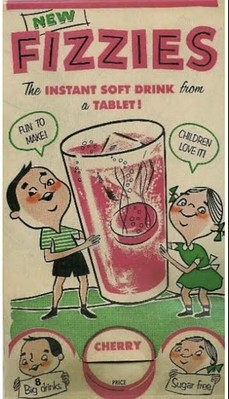
Fizzies

Wax lips

Candy cigarettes

Seven Up bar

Trick or treaters in 1960s

Diane & Leo ready to hit the streets in 1959